Yoga vs Exercise: A Philosophical Difference
At first glance, yoga and exercise appear to occupy the same territory. Both involve movement, discipline, and an investment of time in the body. Both promise strength, flexibility, and improved health. In gyms and studios across the world, yoga is often listed alongside weight training, running, and aerobics as if it were simply another form of physical conditioning.
Yet this surface similarity hides a fundamental difference. Yoga and exercise are not merely two methods aimed at the same goal. They arise from different philosophies of the body, different ideas of effort, and different assumptions about what it means to improve oneself. To confuse the two is not just a semantic error.
The Purpose of Movement
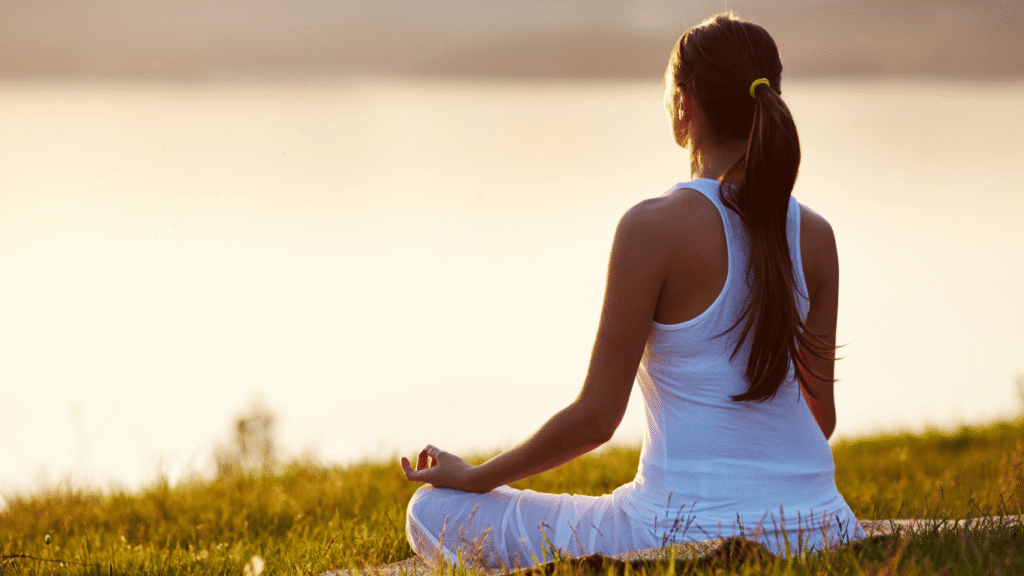
Exercise, in its modern form, is goal-oriented. Whether the aim is to lose weight, build muscle, improve cardiovascular health, or enhance athletic performance, exercise begins with an outcome in mind. Movement is a means to an end. The body is treated as something to be trained, optimized, or corrected.
Progress in exercise is measurable. One runs faster, lifts heavier, lasts longer. Metrics matter because they provide evidence that the body is changing according to intention. Even when exercise is done for enjoyment, the underlying framework remains instrumental: movement is valuable because it produces a result.
Yoga approaches movement differently. Traditionally, yoga was never concerned primarily with physical achievement. Asana the physical postures were designed to prepare the body for stillness, not to conquer it. The purpose of movement in yoga is not to transform the body into an ideal shape or capacity, but to create conditions for awareness.
And there are various other dimensions to yoga than simply being able to perform asanas:
The Eight Aspects of Yoga
- Yama (Ethical restraints)
Moral principles governing our behavior toward others.
Includes:
- Ahimsa (non-violence)
- Satya (truthfulness)
- Asteya (non-stealing)
- Brahmacharya (moderation)
- Aparigraha (non-possessiveness)
- Ahimsa (non-violence)
- Niyama (Personal observances)
Practices for self-discipline and inner growth:
- Saucha (purity)
- Santosha (contentment)
- Tapas (discipline)
- Svadhyaya (self-study)
- Ishvara Pranidhana (surrender to a higher reality)
- Saucha (purity)
- Asana (Posture)
Physical postures that cultivate strength, flexibility, and steadiness.
Traditionally intended to prepare the body for long periods of meditation. - Pranayama (Regulation of breath)
Conscious control of inhalation, exhalation, and retention to influence prana (life force) and calm the nervous system. - Pratyahara (Withdrawal of the senses)
Turning the senses inward, reducing external distractions and preparing the mind for concentration. - Dharana (Concentration)
Sustained focus on a single object, sound, mantra, or idea training the mind to remain steady. - Dhyana (Meditation)
Effortless, continuous awareness where concentration deepens into uninterrupted flow of attention. - Samadhi (Absorption or enlightenment)
The culmination of yogic practice complete union between the meditator and the object of meditation, marked by profound clarity and bliss.
In yoga, the question is not “What can the body do?” but “What can be noticed while the body moves?”, and with the exploration of the other aspects of yoga as we touched upon, can one enter a state of clarity and bliss.
The Relationship With Effort
Exercise celebrates effort. Discomfort is often framed as proof of effectiveness. Phrases like “no pain, no gain” reflect a belief that progress requires pushing beyond limits. Fatigue is interpreted as success. Resistance is something to overcome.
Yoga does not reject effort, but it reframes it. Classical yoga texts speak of sthira (which can be translated as “stillness”) and sukha (which can be translated as “happiness”) steadiness and ease. Effort exists, but it is meant to be balanced by softness. Strain is not a badge of honor; it is information. There is a celebrated phrase in yoga: “Sthiram Sukham Asanam”, meaning “In stillness of performing the asana, one finds peace”.
In yoga, the practitioner learns to distinguish between necessary effort and unnecessary tension. This distinction is subtle and requires attention. Two people may appear to be doing the same posture, yet internally one is practicing awareness while the other is practicing endurance.
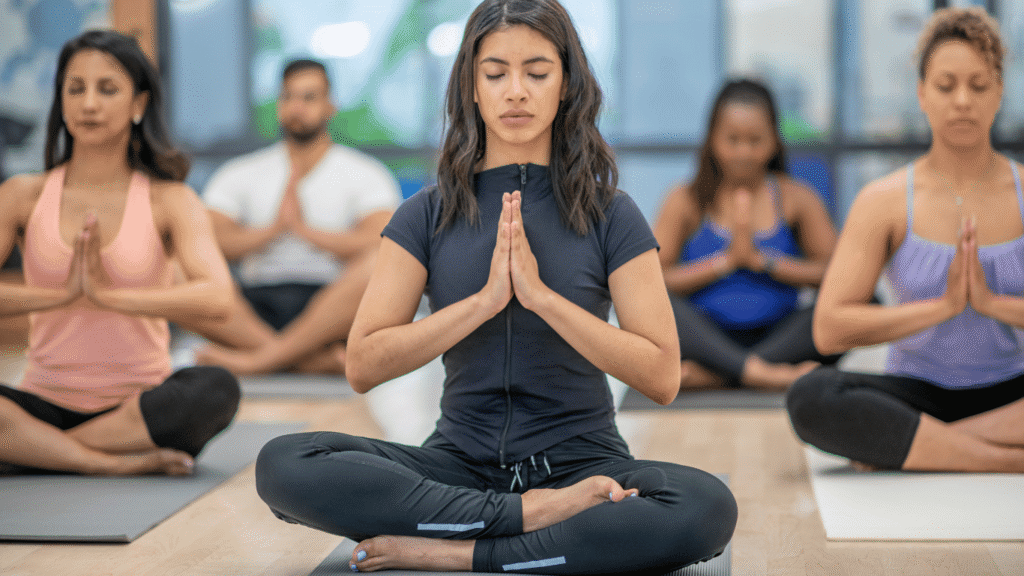
When practising yoga, one could correlate the effort with what the Chinese philosophers call “wu-wei”, the art of not forcing, or better yet, like what Alan Watts said “acting in accord with the pattern of things as they exist”:
“When we follow the principle of wu wei, we do not impose any kind of extraneous force on a situation, because such force, by its very nature, is not in accord with the situation….. following the course of nature, or following the way, what we mean is doing things in accord with the grain. This does not mean we do not cut wood, but that when we cut wood we cut along the grain, where the wood is most easily cut.”
So yoga is about listening to the responses of one’s body to the exertion of effort, and how to minimize the effort to achieve a perfection of forms.
Time, Productivity, and Patience
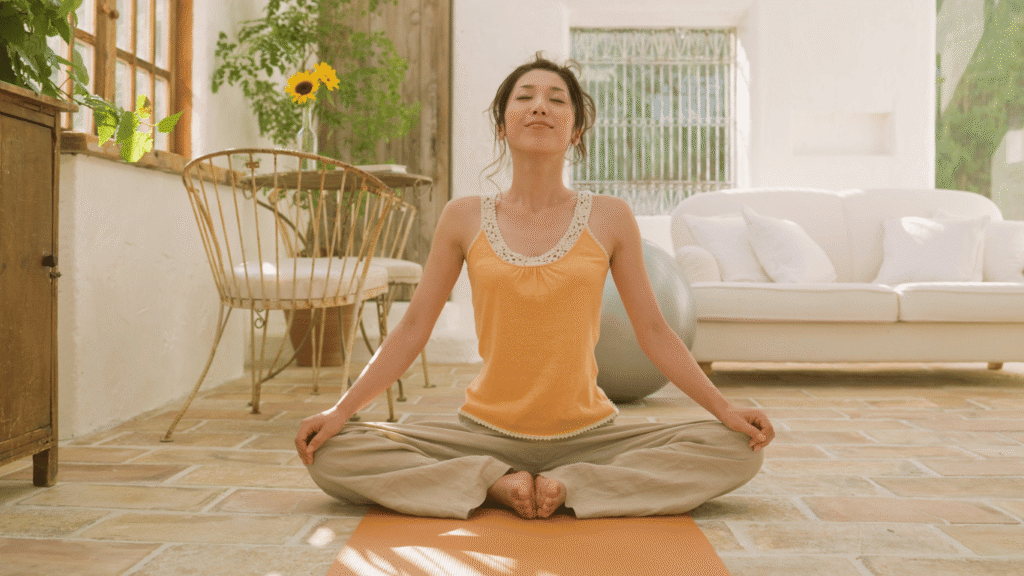
Exercise fits comfortably into modern ideas of productivity. A workout can be efficient, optimized, and time-bound. Thirty minutes must “count.” Every session should justify itself through calories burned or muscles engaged.
Yoga resists this framework. While yoga can be practiced for short or long durations, its value does not depend on an external metric of efficiency. A quiet, uneventful practice is not a failure. In fact, many seasoned practitioners consider uneventful sessions the most revealing.
Yoga operates on a longer timeline. The changes it cultivates greater sensitivity, steadiness of attention, emotional regulation—do not always announce themselves dramatically. They accumulate quietly. This demands patience, something modern fitness culture rarely encourages.
The Body as Object vs the Body as Field
Modern exercise culture often treats the body as an object. It is observed, evaluated, and compared. Mirrors, measurements, and before-and-after photos reinforce this perspective. The body becomes something one has.
Yoga treats the body as a field of experience. Sensation, breath, and movement are not things to be judged but phenomena to be observed. The practitioner is not standing outside the body looking in; they are inhabiting it more fully.
This difference changes the emotional tone of practice. Exercise can easily slip into self-criticism or competition, even when done alone. Yoga, when practiced as intended, cultivates intimacy rather than evaluation.
The goal is not to look different, but to feel more present.
The Role of the Mind

In exercise, the mind often serves as a driver. It issues commands, sets targets, and pushes the body forward. Distraction is sometimes welcomed music, podcasts, or television help make exertion tolerable.
Yoga invites the opposite relationship. The mind is not meant to escape the body but to accompany it. Distraction is gently reduced. Attention is trained to remain with sensation, breath, and movement as they are.
Over time, this changes how one relates not only to physical effort but to mental patterns. Impatience, judgment, and restlessness become visible. Yoga does not aim to eliminate these traits, but to reveal them.
In this sense, yoga is less about doing and more about seeing.
Why the Difference Matters
None of this is an argument against exercise. Exercise is valuable, necessary, and often life-enhancing. Strong hearts, resilient muscles, and healthy joints matter. Many people benefit enormously from structured physical training.
The issue arises when yoga is reduced to exercise alone. When it is taught and practiced solely as a way to burn calories or sculpt the body, its deeper function is lost. The postures remain, but the orientation changes.
Understanding the philosophical difference allows practitioners to choose consciously. One can exercise without expecting introspection, and practice yoga without demanding physical achievement. Confusion arises only when expectations are misplaced.
Bottom Line
Exercise progress is visible. Yoga progress is often invisible, even to the practitioner. It appears in how one responds to discomfort, how one breathes under pressure, how one listens instead of forcing.
These changes do not announce themselves in mirrors or numbers. They appear in daily life, often unnoticed at first.

Sruti Kafle
Sruti, the creative head and life behind Shruti’s School of Performing Arts (SOPA), is an accomplished Kathak performer and teacher. A graduate in Kathak from Allahabad University (Kathak Visharad), she has trained extensively through workshops in the Jaipur Gharana while specializing in the Lucknow style.