Why Yoga Refuses to Be Measured in Reps

Modern fitness culture is obsessed with numbers. Steps are counted, calories are burned, heart rates are optimized, and repetitions are thought of as a proof of effort. Progress is quantified, graphed, and shared. In this landscape, yoga is an anomaly. It does not lend itself easily to repetitions or sets. A repetition isn’t a yardstick for Yoga because, it can be plausibly argued that Yoga isn’t statistical science.
The Language of Repetition Belongs to Exercise
Repetitions come from a worldview rooted in output. In exercise, the body is trained to perform, to improve efficiency, strength, endurance, or speed. A squat repeated twenty times is objectively more work than a squat done ten times. The metric makes sense because the goal is measurable physical adaptation.
Many artists talk about the 10,000 hour rule: Ed Sheeran, the famed musician also touched upon how he also lives by the 10,000 hour rule. While practising yoga’s asanas for 10,000 hours would help you to become extraordinarily good at it, yoga’s dimensions are multifaceted.
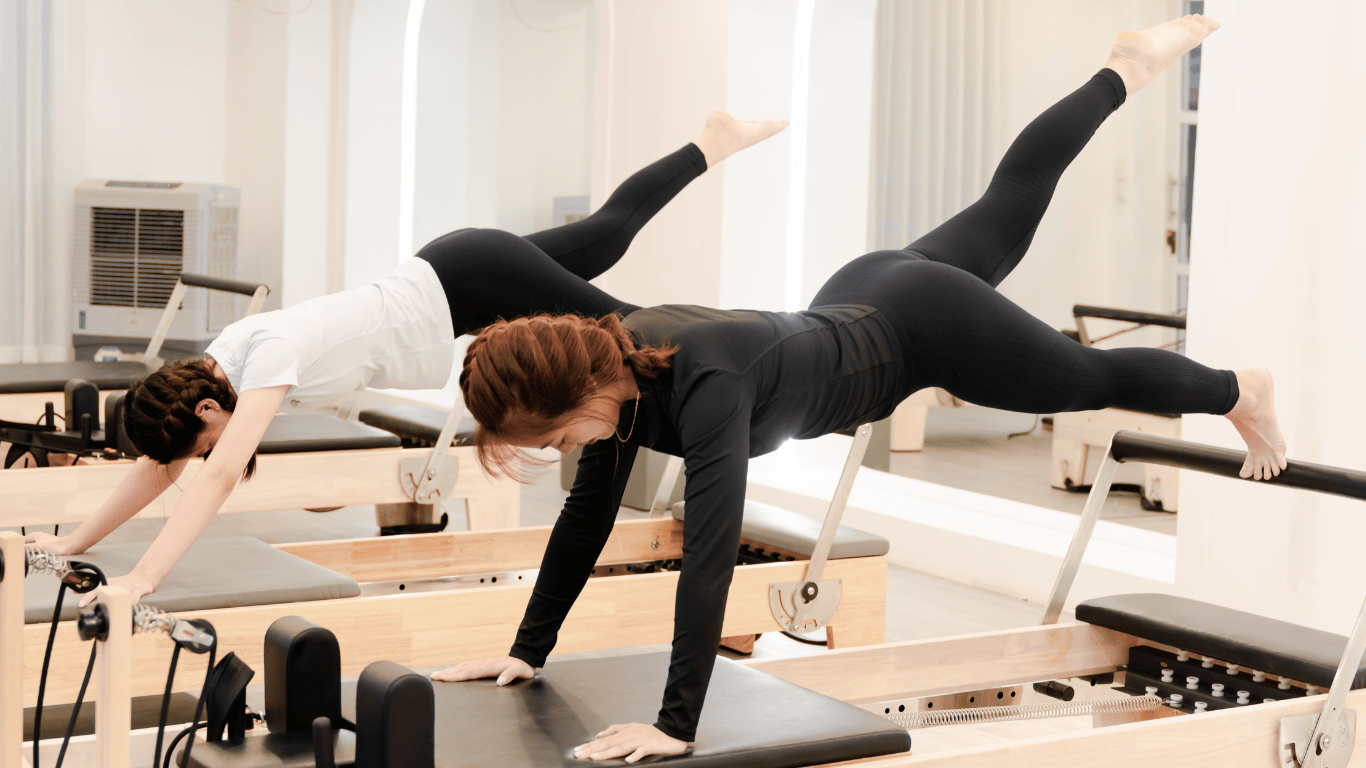
Yoga operates in a different linguistic universe. It does not reward accumulation but attention. A posture held once, with full awareness, can be more complete than the same posture repeated a dozen times. Also there’s the idea of Yoga’s parallels with isometric exercises: the ones where you have a static contraction of muscles without any visible movement in the angle of the joint. And the benefits of these include:
- Builds strength and muscular endurance without joint movement
- Improves joint stability and posture by activating stabilizing muscles
- Low-impact and low-injury risk, suitable for all fitness levels
- Effective for rehabilitation and pain management when applied progressively
- Enhances mind–muscle connection and neuromuscular control
- Time-efficient and equipment-free, easy to practice anywhere
This is why yoga resists being absorbed fully into gym culture. The language of reps flattens an experience that is meant to be dimensional-physical, mental, emotional, and subtle all at once.
Asana Is Not the Goal
In classical yoga philosophy, asana is only one limb among eight. Even within that limb, posture is not the destination; it is the entry point. The body is not being trained for performance but prepared for perception.

A rep implies completion: one movement done, counted, finished. Yoga postures are not discrete units in that way. Each time you enter the same asana, you are not repeating the same experience. Further, unlike exercising where a physical clock and the time it shows is the metric against which you perform repetitions, yoga practitioners often substitute the physical clock with ones’s breath: Someone holding a still pose in an asana might hold the stance for 30 breaths instead of 30 seconds. And everyone’s breath is different.
Yoga Works With States, Not Scores
Exercise thrives on comparison-today versus yesterday, you versus the benchmark. Yoga quietly undermines this instinct. It asks you to notice internal states rather than external achievements.
Did the breath become smoother? Did the mind soften? Did awareness expand beyond effort? These are not metrics that can be logged in a notebook, yet they are the true indicators of progress in yoga. While in the modern fitness culture, people are often seen as exercising while playing music or listening to podcasts, Yoga practitioners often stress on meditating in the asanas: as the old saying is “the true form of meditation is when you are engaged in walking while you are walking or simply eating when you are eating”.
A practitioner may hold Warrior II for two minutes and gain nothing but fatigue. Another may hold it for thirty seconds and discover a new relationship with discomfort, balance, or breath. Which one “did more yoga”? The question itself exposes the inadequacy of counting.
In refusing reps, yoga quietly protests against a culture that equates worth with productivity. It challenges the idea that effort must always look intense, that progress must always be visible, that value must always be measurable.
Time in Yoga Is Qualitative, Not Quantitative
In exercise, time is linear and additive. More minutes generally mean more work. In yoga, time behaves differently. A single minute of deep, undistracted presence can feel expansive. Ten minutes of distracted holding can feel empty.
This is why advanced practitioners often appear to “do less.” Their practice may be quieter, slower, even minimal by external standards. Yet internally, it is dense with observation and restraint. Yoga does not ask how long you stayed. It asks how fully you arrived.
The Body Is Not an Object to Be Conquered
Repetition carries an implicit philosophy: the body is something to be pushed, shaped, optimized. Yoga proposes a different relationship. The body is not an object to dominate but a field of sensation to listen to.
Pain, trembling, ease, restlessness-these are not obstacles to be overcome but signals to be interpreted. Counting reps encourages overriding signals in service of completion. In getting rid of the counting reps and observing the time and aligning oneself fully with the practise of yoga, it helps to touch “infinity”

“From one point of view, each moment is so elusive and so brief that we cannot even think about it before it has gone. From another point of view, this moment is always here, since we know no other moment than the present moment. It is always dying, always becoming past more rapidly than imagination can conceive. Yet at the same time it is always being born, always new, emerging just as rapidly from that complete unknown we call the future.”
This is why yoga’s benefits often appear indirect. Strength arises, flexibility increases, balance improves, and observing powers deepen-but as byproducts, not targets. The body responds because it is being attended to, not because it is being forced.
What Progress Looks Like Without Numbers
If yoga is not measured in reps, how does one know they are progressing?
Progress in yoga often shows up sideways:
- You react less quickly.
- You breathe more fully in moments of stress.
- You notice discomfort sooner and respond more wisely.
- You stop forcing postures and start inhabiting them.
To practice without counting is to practice without bargaining. There is no finish line to negotiate with, no minimum requirement to satisfy. You show up, observe, respond, and leave when the practice feels complete.
This freedom is deeply countercultural. It asks practitioners to trust inner cues over external rules. It demands honesty rather than discipline alone.
Conclusion: Why Yoga Must Remain Unmeasurable
Yoga refuses to be measured in reps because its purpose is not performance but presence. It is not designed to build a body that can do more, but a mind that can see more clearly through the body.
To reduce yoga to repetitions is to misunderstand its intent. Yoga is not a sequence to complete but a relationship to cultivate-one that deepens not through accumulation, but through attention. In a world that counts everything, yoga remains one of the rare practices that asks you to stop counting-and start listening.

Sruti Kafle
Sruti, the creative head and life behind Shruti’s School of Performing Arts (SOPA), is an accomplished Kathak performer and teacher. A graduate in Kathak from Allahabad University (Kathak Visharad), she has trained extensively through workshops in the Jaipur Gharana while specializing in the Lucknow style.